
How Do I Know If I Need Professional Drain Cleaning?
You likely need professional drain cleaning when clogs keep returning, multiple fixtures drain slowly, pipes gurgle, foul odors persist, or wastewater backs up. Other warning signs include drain flies, standing water, toilet flushing problems, sewage near a cleanout, and frequent reliance on plungers or drain chemicals. Multiple symptoms often point to a deeper blockage.
Clear Knight Plumbing helps homeowners and businesses identify what is slowing a drain and which cleaning method fits the problem. With more than a decade of plumbing experience, a licensed and insured team, upfront pricing, and a written workmanship warranty, the company emphasizes clear recommendations instead of guesswork. A kitchen clog, blocked branch line, and damaged main sewer line can produce similar symptoms but require different solutions. The goal is to restore reliable flow and help prevent another messy interruption.
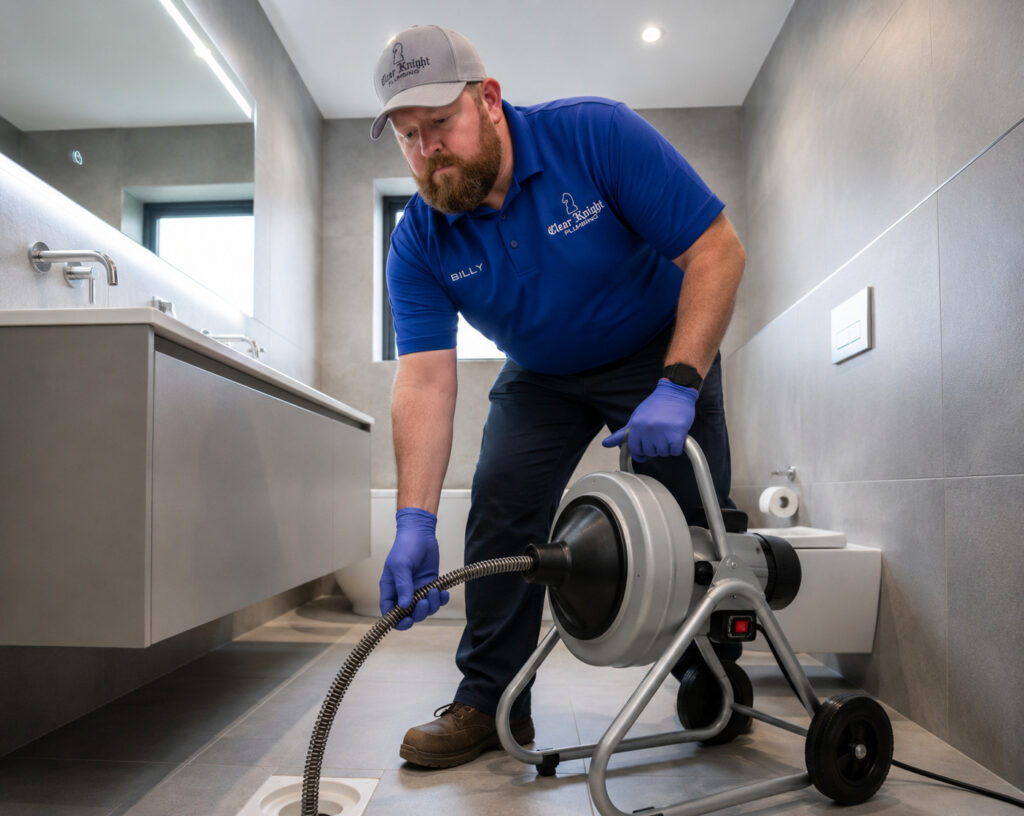
Warning Signs of a Clogged Drain That Needs a Plumber
Professional drain cleaning is usually appropriate when a problem persists, affects more than one fixture, or creates a sanitation risk. Watch for these 10 signs before a partial blockage becomes a complete stoppage.
What Are the 10 Signs You Need Professional Drain Cleaning?
- Drains empty more slowly than normal. Hair, grease, soap, food particles, or mineral buildup may be narrowing the pipe. If removing visible debris does not restore flow, the obstruction may be deeper.
- The same clog keeps coming back. A returning clog was probably opened only enough for water to pass. Professional equipment can address compacted material left behind by basic household tools.
- Several fixtures drain slowly at once. One slow sink often indicates a local clog. A slow toilet, tub, and sink together can signal a blockage in a shared branch or main sewer line.
- Drains or toilets gurgle. Gurgling often means displaced air is struggling to move through the drainage system. Pay attention when one fixture makes noise while another is used.
- Drain odors do not go away. Persistent rotten, musty, or sewage-like smells may come from trapped organic matter, a dry trap, or a sewer problem. Recurring odors need diagnosis, not fragrance.
- Water backs up into another fixture. Water rising in a tub when the toilet flushes suggests wastewater cannot follow its intended path. Stop using affected fixtures and arrange service.
- Standing water remains around a drain. Pooling water can expose nearby materials to moisture. Standing wastewater is also a sanitation concern, not merely an inconvenience.
- Small flies gather near the drain. Drain flies can breed in moist organic film inside pipes. Persistent insects may indicate buildup beyond the visible opening.
- The toilet flushes weakly or its water level changes. Bubbling, poor flushing, or unexplained bowl-level changes may accompany restricted drainage. Avoid repeated flushing if plunging does not create lasting improvement.
- Sewage appears near a cleanout or low drain. Wastewater around an exterior cleanout, floor drain, or other low point can indicate a serious backup. Keep people and pets away, limit water use, and call for help promptly.
When Is a Slow Drain More Than a Minor Clog?
A slow drain is more concerning when it worsens, returns after basic cleaning, or appears with gurgling, odors, or changes in other fixtures. Those patterns suggest the problem may extend beyond the drain opening.
Remove only debris you can safely reach, clean the stopper, and test the fixture with a modest amount of water. If it remains slow, do not keep sending water into a line that may be close to fully blocked. Repeated chemical drain cleaner use can also expose people and plumbing components to harsh substances. Tell the plumber about any products already used.
Do Multiple Slow Drains Mean the Main Sewer Line Is Clogged?
Multiple slow drains can indicate a main sewer blockage, especially when the lowest fixtures react first or water moves between fixtures. It is not conclusive, because venting problems and separate clogs can create similar symptoms.
The U.S. Environmental Protection Agency says sewer cleaning and inspection programs reduce sanitary sewer overflows, basement backups, and other wastewater releases. It also identifies closed-circuit television inspection as an effective way to evaluate sewer interiors. For recurring or system-wide trouble, a plumber may recommend a camera inspection to look for roots, buildup, cracking, a low section, or another defect.
The City of Fort Worth explains that groundwater infiltration and stormwater inflow can consume public sewer capacity and contribute to backups. Fort Worth residents can report a suspected public sewer clog to the city. A licensed plumber can help distinguish a private plumbing obstruction from a utility issue.
What Happens During Professional Drain Cleaning?
Professional drain cleaning starts by identifying the affected fixtures and likely blockage location. The plumber then selects equipment based on the pipe, access point, obstruction, and drainage-system condition.
A typical visit may include:
- Reviewing when the problem began and which fixtures are affected
- Inspecting accessible drains, traps, and cleanouts
- Using suitable mechanical or water-based cleaning equipment
- Testing flow after the obstruction is cleared
- Recommending a camera inspection when damage is suspected
Cleaning can restore flow, but it cannot repair a broken, collapsed, offset, or severely deteriorated pipe. Accurate diagnosis prevents repeated cleaning of a line that actually needs repair.
How Can You Help Prevent Another Drain Clog?
Keep grease, fibrous food, wipes, hygiene products, and excess hair out of drains. Even products labeled “flushable” can contribute to blockages because they may not break apart as readily as toilet paper.
- Put cooking grease in a sealed container, not the sink.
- Use sink and shower strainers, then empty them regularly.
- Flush only human waste and toilet paper.
- Follow the garbage disposal manufacturer’s instructions.
- Address recurring slow drains before a backup develops.
Frequently Asked Questions About Drain Cleaning
How often should drains be professionally cleaned?
There is no universal schedule. Cleaning frequency depends on symptoms, clog history, pipe condition, household use, and whether a commercial or high-use system faces heavier buildup.
Can I clear a clogged drain myself?
You may be able to remove an accessible hair clog or use a plunger for a simple stoppage. Call a professional when the clog returns, multiple fixtures are affected, sewage appears, or basic methods fail.
Is a gurgling drain an emergency?
Not always, but gurgling signals abnormal airflow or drainage. If it occurs with backups, sewage odors, or several slow fixtures, limit water use and arrange prompt service.
Will professional drain cleaning fix tree roots?
Cleaning may remove root intrusion and restore flow, but roots can return when they enter through a pipe defect. A camera inspection can show whether the sewer line also needs repair.
Ready for Clear, Reliable Drain Cleaning?
Do not wait for a slow drain to become a sewage backup. Contact Clear Knight Plumbing to schedule professional drain cleaning and get a straightforward recommendation for your home or business.